
• Skip to primary navigation
  • Skip to main content
  • Skip to footer

Fitch Services

Fitch Services

Family-Owned Since 1983

Emergency Service 434-296-9980

Call Us Now
  • HVAC
    • HVAC
    • Repairs
      • Heating Repair
      • Air Conditioning Repair
      • Heat Pump Repair
      • Furnace & Boiler Repair
      • Emergency HVAC Repair
    • Maintenance
      • HVAC Maintenance Plans
      • Seasonal Servicing
      • Hydronic Heating Systems
      • Gas & Oil Furnaces and Boilers Maintenance
    • Installations
      • New HVAC Systems
      • Furnace & Boiler Installation
      • Heat Pump Installation
      • Air Cleaners, Humidifiers & Dehumidifiers
      • Ductwork Installation
    • Remodeling & New Construction
  • Plumbing
    • Plumbing
    • Repairs
      • Drain Cleaning & Unclogging
      • Sewer Line Services
      • Water Line Repairs
      • Well Pump Repairs
      • Emergency Plumbing
    • Maintenance
      • Water Heater Maintenance
      • Acid Neutralizers
      • Water Softeners
    • Installations
      • Water Heater Installation
      • Plumbing Fixture Installation
      • Water Filtration Systems
    • Remodeling & New Construction
  • Electrical
    • Electrical
    • Repairs
      • Circuit Repair
      • Outlet Repair
      • Emergency Electrical Repair
      • Generator Repair
    • Maintenance
    • Installations
      • Electrical Panel Upgrades
      • Lighting & Fixture Installation
      • Rewiring
      • Generator Installation
      • Smoke Alarms & Detectors
      • Ceiling Fan Installation
      • Surge Protector Installation
      • Gas Line Bonding
    • Remodeling & New Construction
  • About
    • About Us
    • Reviews
    • Careers
  • Contact Us
  • Emergency Service 434-296-9980

    Call Us Now

Home Helpful Tips Heating Why Spring is a Great Time for HVAC Maintenance

Why Spring is a Great Time for HVAC Maintenance

Yellow and blue bird on branch over outdoor HVAC unit during Spring in Charlottesville

As spring settles in and the temperatures start rising around Charlottesville and Albemarle County, it's time to give your HVAC system some much-needed attention. HVAC maintenance in spring is not just a routine task; it's an essential step towards ensuring the efficiency and longevity of your system.

Regular maintenance of your HVAC system can save you from unpleasant surprises when the scorching heat of summer arrives. It also helps in identifying and resolving any potential issues before they turn into major breakdowns, ultimately saving you time, money, and discomfort.

Not only does spring HVAC maintenance keep your system running smoothly, but it also improves indoor air quality and reduces energy consumption. This can be especially valuable for those prone to seasonal allergies of plants coming into bloom. By cleaning and inspecting components such as filters, coils, and ducts, you can enhance the overall performance of your HVAC system, leading to better airflow and lower utility bills.

So, don't wait for the first heatwave to hit before taking care of your HVAC system. Get ahead of the game and schedule your spring maintenance now. It's a small investment that pays off in comfort and peace of mind throughout the summer months.

Schedule Spring HVAC Maintenance

  • The importance of HVAC maintenance
  • Understanding the seasonal impact on HVAC systems
  • Benefits of spring HVAC maintenance
  • Common HVAC issues in spring
  • DIY HVAC maintenance tips for spring
  • Hiring a professional HVAC technician for spring maintenance
  • Spring HVAC maintenance checklist
  • Cost-saving benefits of regular HVAC maintenance
  • Signs that your HVAC system needs maintenance

The importance of HVAC maintenance

Proper HVAC maintenance is crucial to keep your system functioning optimally. Neglecting regular maintenance can lead to decreased efficiency, increased energy consumption, and a higher risk of system breakdowns. By investing in regular HVAC maintenance, you can avoid these issues and ensure the longevity of your system.

During the winter months, your HVAC system might have accumulated dust, dirt, and debris, which can hinder its performance. Spring maintenance allows you to clean and inspect the system, removing any buildup that could affect its efficiency. Additionally, routine maintenance helps identify any potential issues early on, preventing them from turning into expensive repairs down the line.

Regular HVAC maintenance also contributes to better indoor air quality. Over time, dust, allergens, and contaminants can accumulate in your HVAC system, leading to poor air quality and potential health issues. By cleaning or replacing filters, cleaning ducts, and inspecting components, you can reduce the presence of pollutants in your indoor air.

Understanding the seasonal impact on HVAC systems

Different seasons have varying effects on HVAC systems. In spring, transitioning from the colder months to warmer weather brings about certain challenges for your system.

During winter, your HVAC system works hard to keep your home warm, and this can take a toll on its components. As spring arrives, the warmer temperatures require your system to switch from heating to cooling mode. This transition can strain the system, especially if it hasn't been properly maintained.

Spring is also a time when allergies are at their peak. Pollen, dust, and other allergens can find their way into your HVAC system, affecting its performance and contributing to poor indoor air quality. Regular maintenance can address these issues, ensuring that your system is ready to tackle the challenges of spring.
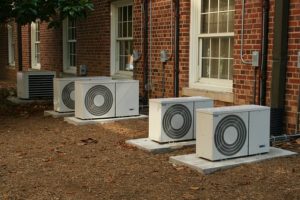
Outdoor Air Conditioning Unit Spring Maintenance Tips in Charlottesville

Benefits of spring HVAC maintenance

There are several benefits to performing HVAC maintenance in the spring:

  1. Improved system efficiency: By cleaning and inspecting components such as filters, coils, and ducts, you can enhance the overall performance of your HVAC system. This leads to better airflow, improved energy efficiency, and lower utility bills.
  2. Extended system lifespan: Regular maintenance helps identify and address potential issues before they escalate into major problems. By catching problems early on, you can extend the lifespan of your HVAC system and avoid costly repairs or premature replacements.
  3. Enhanced indoor air quality: Spring maintenance involves cleaning or replacing air filters, removing dust and debris from the system, and inspecting ductwork. These actions contribute to better indoor air quality, reducing the presence of allergens and improving the overall comfort of your home. And of course there are always air quality improvement options if needed.
  4. Reduced energy consumption: A well-maintained HVAC system operates more efficiently, resulting in lower energy consumption. This not only benefits the environment but also reduces your monthly utility bills.

Common HVAC issues in spring

As spring arrives, certain HVAC issues become more common. Being aware of these issues can help you address them promptly and prevent any major disruptions to your comfort.

  1. Clogged air filters: Over the winter months, air filters can become clogged with dust, debris, and pet dander. This reduces airflow and puts strain on the system. Regularly cleaning or replacing air filters can prevent this issue and improve system efficiency.
  2. Refrigerant leaks: Warmer temperatures in spring require your air conditioning system to work harder. If your system has a refrigerant leak, it may struggle to cool your home efficiently. Professional maintenance can detect and repair any refrigerant leaks, ensuring optimal cooling performance.
  3. Thermostat issues: After a long winter, your thermostat may need recalibration or battery replacement. This ensures accurate temperature readings and proper functioning of your HVAC system.
  4. Ductwork problems: Over time, ductwork can develop leaks or become blocked by debris. This can lead to inefficient heating or cooling and poor indoor air quality. Professional maintenance can identify and address any issues with your ductwork.

DIY HVAC maintenance tips for spring

While professional HVAC maintenance is essential, there are also some steps you can take on your own to keep your system running smoothly in spring:

  1. Clean or replace air filters: Dirty air filters can impede airflow and reduce system efficiency. Check your filters regularly and clean or replace them as needed.
  2. Clear debris around outdoor units: Remove any leaves, twigs, or other debris that may have accumulated around your outdoor HVAC unit. This ensures proper airflow and prevents damage to the unit. Over the winter homeowners tend to stay indoors and not walk around their property as much. So look around your outdoor unit and ensure there is no damage from outdoor winter conditions, or any new critters that have taken up residency inside the unit.
  3. Check and clean condenser coils: Over time, condenser coils can become dirty, affecting the efficiency of your air conditioning system. Use a soft brush or vacuum to remove any debris from the coils.
  4. Inspect ductwork: Look for any visible signs of leaks or damage in your ductwork. Seal any leaks with duct tape or contact a professional for repairs.

Hiring a professional HVAC technician for spring maintenance

While DIY maintenance is beneficial, hiring a professional HVAC technician for spring maintenance is highly recommended. We have the expertise and tools to thoroughly inspect and clean your system, ensuring that it is in optimal condition for the upcoming season.

A professional technician will perform a comprehensive inspection, checking for any issues that may affect the performance of your HVAC system. They will clean components, lubricate moving parts, check refrigerant levels, and perform any necessary repairs or adjustments.

By hiring a professional, you can have peace of mind knowing that your HVAC system is in the hands of a qualified expert. They can identify and address potential problems that you may not be aware of, ultimately saving you from costly breakdowns and ensuring the longevity of your system.

Spring HVAC maintenance checklist

Springtime Snow Melting on Grass near Outdoor HVAC Unit in Charlottesville

Here is a checklist of tasks that should be included in your spring HVAC maintenance routine:

  1. Clean or replace air filters.
  2. Check and clean condenser coils.
  3. Inspect and clean evaporator coils.
  4. Clean and clear debris around outdoor units.
  5. Lubricate moving parts.
  6. Check refrigerant levels and adjust if necessary.
  7. Inspect and clean ductwork.
  8. Test thermostat accuracy and replace batteries.
  9. Tighten electrical connections.
  10. Inspect and clean blower motor and fan blades.

By following this checklist and scheduling professional maintenance, you can ensure that your HVAC system is in top shape for the spring and summer months.

Cost-saving benefits of regular HVAC maintenance

Investing in regular HVAC maintenance plans may seem like an additional expense, but it can save you money in the long run. Here are some cost-saving benefits of regular maintenance:

  1. Avoid costly repairs: Regular maintenance allows for the early detection and resolution of potential issues. By addressing these issues before they escalate, you can avoid costly repairs or system breakdowns that may require emergency service.
  2. Extend system lifespan: A well-maintained HVAC system lasts longer. By taking care of your system through regular maintenance, you can delay the need for expensive replacements and get the most out of your investment.
  3. Improved energy efficiency: A properly maintained HVAC system operates more efficiently, reducing energy consumption and lowering your monthly utility bills. The cost savings over time can outweigh the expense of regular maintenance.
  4. Warranty protection: Some HVAC manufacturers require regular maintenance as a condition for warranty coverage. By adhering to maintenance requirements, you can ensure that any potential repairs or replacements are covered by the warranty, saving you money on parts and labor.

Signs that your HVAC system needs maintenance

While regular maintenance is crucial, there are also signs that your HVAC system may need immediate attention. If you notice any of the following signs, it's time to schedule maintenance:

  1. Insufficient cooling or heating: If your HVAC system is struggling to reach the desired temperature or is unevenly cooling or heating your home, it may be a sign of underlying issues that require professional attention.
  2. Strange noises: Unusual noises such as grinding, squealing, or banging coming from your HVAC system could indicate a mechanical problem. Ignoring these noises may lead to further damage if not addressed promptly.
  3. Increased energy bills: A sudden spike in your energy bills without a corresponding increase in usage may indicate that your HVAC system is operating inefficiently. Professional maintenance can help identify the cause and restore efficiency.
  4. Frequent system cycling: If your HVAC system is constantly turning on and off, it may be a sign of an underlying issue that needs to be addressed. This can lead to increased wear and tear on the system if left unattended.

You can always wait until summer…

And see what the first heatwave does your HVAC system. You’ll probably be fine. But neglecting maintenance will also increase your odds of joining an exclusive group of hot and irritated homeowners desperate for same-day Charlottesville HVAC service to get their air conditioning working again. I think we'd both agree – it’s a group you'd rather not be a part of. Schedule your spring maintenance now and enjoy a cool and comfortable home throughout the summer months. It's a small investment that pays off in comfort, peace of mind, and cost savings.

Spring HVAC maintenance is not just a routine task; it's a crucial step towards ensuring the efficiency, longevity, and comfort of your HVAC system. By investing in regular maintenance, you can avoid costly breakdowns, improve indoor air quality, reduce energy consumption, and extend the lifespan of your system.

Schedule Spring HVAC Maintenance

Frequently Asked Questions

A burning smell from an outlet, switch, or electrical panel is a serious warning sign that should never be ignored. Stop using any outlets or switches in the affected area immediately. If the smell is coming from the panel, do not attempt to open it or reset any breakers. Leave the home if the smell is strong or persistent and call 911 — a burning smell from electrical equipment can indicate wiring that is actively overheating or smoldering inside a wall. Once it's safe, call a licensed electrician before restoring power to the affected area.

An occasional very brief spark when plugging something in can be normal — it's caused by the initial surge of electricity as the circuit connects. But sparks that are large, persistent, accompanied by a popping sound, or happen repeatedly are not normal and indicate a problem. Stop using the outlet immediately. A sparking outlet can be a sign of a loose connection, faulty wiring, or a worn outlet that needs to be replaced. This warrants a call to a licensed electrician — a sparking outlet that goes unaddressed is a fire risk.

Resetting a breaker once after an obvious overload — running too many appliances on the same circuit at once — is generally safe. A breaker that trips repeatedly, won't stay reset, or trips again immediately after being reset is telling you something more serious is happening on that circuit. Continuing to reset it without identifying the cause is not a safe approach — the breaker is doing its job by tripping, and overriding that protection repeatedly creates risk. A licensed electrician should evaluate the circuit to find the actual cause.

Signs that warrant prompt attention from a licensed electrician include: a persistent burning smell from outlets, switches, or the panel; outlets or switches that feel warm or hot to the touch; visible scorch marks or discoloration around outlets or switches; lights that flicker consistently without an obvious cause; breakers that trip repeatedly; buzzing or crackling sounds from outlets or walls; and any situation where you see sparks. These symptoms can indicate wiring issues, overloaded circuits, or failing components that create real fire and safety risk if left unaddressed.

Any situation that feels unsafe warrants a call — trust that instinct. Specific situations that should prompt an immediate call include: a burning smell from anywhere in the electrical system, sparking or scorch marks at outlets or the panel, a complete loss of power to part or all of the home that isn't explained by a simple tripped breaker, any sign of electrical fire such as smoke or a burning smell from walls, or a breaker that won't stay reset. When in doubt, it's always better to call than to wait. Electrical problems that feel urgent usually are.

A smoke detector that keeps chirping is usually signaling one of two things — an intermittent chirp typically indicates the detector itself may be defective, while a consistent chirp often indicates a low battery. A smoke detector that's chirping should be addressed promptly, as a malfunctioning or dead-battery detector provides no protection.

Common signs include breakers that trip frequently, a panel that feels warm to the touch, a home that can't accommodate added electrical demand without tripping breakers, visible corrosion or burning around breakers, a panel that's more than 25 to 30 years old, or a Federal Pacific or Zinsco panel — both of which have known safety issues. An outdated or undersized panel is also often flagged during home inspections and insurance renewals.

GFCI stands for Ground Fault Circuit Interrupter. In plain terms, this device protects against electrical shock. When it senses even a slight increase in resistance — such as what occurs when electrical devices are used in or near water — it trips off immediately to protect you. GFCI protection is required by code in bathrooms, kitchens, garages, and other areas where water is present.

The black button is a test button — when pressed, it should deactivate the outlet and any other outlets fed from it, confirming the device is functioning properly. The red button is the reset button, used to reactivate the outlet after it has tripped due to a fault. If a GFCI outlet won't reset or trips repeatedly, that's a sign of an underlying issue worth having evaluated.

Both breakers and fuses serve the same fundamental purpose — they trip or blow in the event of an electrical overload to protect the wiring and prevent fires. The key difference is that a breaker is a mechanical device that can be reset after it trips, while a fuse is a one-time device that must be replaced once it blows. Modern breaker panels are significantly more efficient and offer greater levels of protection than older fuse panels.

In many cases, yes — but it's important to confirm that the existing electrical box is properly braced and rated for the weight and continuous motion of a ceiling fan, not just a light fixture. Standard light fixture boxes are often not rated for fans. A licensed electrician can assess the existing box and handle the installation correctly.

Fuses and circuit breakers are designed to trip when a circuit is overloaded or a fault is detected — it's a safety feature, not a malfunction. Ground fault interrupters are also susceptible to moisture and weather conditions and may trip in those circumstances. Repeated tripping without an obvious cause is a sign that something in the electrical system warrants a closer look by a licensed electrician.

A tripped breaker is the electrical system's way of signaling that something on that circuit needs attention — either a temporary overload or a more serious underlying issue. Breakers are mechanical devices that need to be turned all the way off before they can be reset. If a breaker won't reset or trips again immediately, that's a sign of a problem that warrants evaluation by a licensed electrician.

There are a few simple things worth checking before calling — whether the outlet might be controlled by a wall switch, whether a GFCI outlet on the same circuit has tripped and needs to be reset, and whether the circuit breaker has tripped. These are the most common causes of outlets and lights suddenly stopping. If none of those explain the problem, the cause is likely something deeper in the electrical system — and that's when a licensed electrician should take a look.

Light flickering or dimming when large appliances start up — such as an air conditioner or heat pump — is a common and generally harmless occurrence caused by the momentary voltage drop those motors create. Flickering that happens without an obvious trigger, or that is persistent and widespread throughout the home, may indicate an issue with the home's wiring or electrical system worth having evaluated by a licensed electrician. Utility supply issues can also be a cause — your local electric company can rule that out.

Yes — this is a common occurrence when large motor-driven equipment like an air conditioner starts up. The startup draws a brief surge of power that causes a momentary voltage drop, which shows up as a brief blink in the lights. This is normal and has no negative effect on your home's electrical equipment.

No — surge and lightning protection offers meaningful additional protection, but nothing can guarantee 100% protection against a direct lightning strike. Whole-home surge protection is still a worthwhile investment for the protection it provides against the far more common voltage spikes that occur during storms, utility switching, and power restoration.

Yes — whole-home surge protection at the main panel is not an absolute guarantee against every type of voltage spike. Point-of-use surge protectors on sensitive electronics like televisions, computers, and audio equipment provide an additional layer of protection. Layered surge protection is always a more complete approach than relying on a single point of defense.

In most cases, yes — electrical work that involves new installations, panel upgrades, or significant modifications typically requires permits and inspections. Permit requirements vary by locality but exist to ensure the work is done safely and to code. Working with a licensed electrician means permits are handled correctly as part of the process, and the work is inspected and documented before walls close up.

Electrical rewiring involves replacing the wiring throughout some or all of a home — typically when the existing wiring is outdated, damaged, or no longer safe. Homes with knob and tube wiring or aluminum wiring from the 1960s and 70s are common candidates. Signs that rewiring may be needed include frequently tripping breakers, flickering lights, burning smells, or a home inspector flagging the wiring. Rewiring is also common during major renovations when walls are already open. A licensed electrician can assess the existing system and recommend the appropriate scope of work.

A Level 2 charger operates on 240 volts — the same voltage as a clothes dryer or electric range — and charges an electric vehicle significantly faster than a standard 120-volt household outlet. Most EV owners find that a Level 2 charger at home is the most practical solution for keeping the vehicle charged overnight. The standard 120-volt option — sometimes called Level 1 charging — adds only a few miles of range per hour, which isn't sufficient for most daily driving patterns. A licensed electrician can assess your panel capacity and install the right charging solution for your vehicle and your home.

The installation time depends on several factors — the location of the charging station relative to the electrical panel, whether any panel upgrades are needed, and how the wiring needs to be routed. A straightforward installation in a garage close to an adequate panel can often be completed in a few hours. More complex installations involving panel upgrades or longer wiring runs take longer. Every home is different, and a licensed electrician can give you a realistic picture of what your specific installation will involve before any work begins.

It depends on your existing panel's capacity. A Level 2 charger requires a dedicated 240-volt circuit, typically rated at 40 to 50 amps. If your panel is already near capacity or is older and undersized for modern electrical demand, an upgrade may be necessary before the charger can be safely installed. A licensed electrician will assess your panel as part of the installation process and advise you on whether an upgrade is needed. In many cases the existing panel is adequate — but it's worth evaluating before purchasing equipment.

An electrical maintenance program typically involves periodic inspection of the electrical panel for signs of wear, overheating, or loose connections, testing of GFCI and AFCI protection, inspection of accessible wiring and outlets, and identification of any code deficiencies or safety concerns that have developed over time. The specific scope varies by program and home — the goal is a clear picture of where the electrical system stands and what, if anything, needs attention before small issues become larger ones.

For most homes, a professional electrical inspection every three to five years is a reasonable baseline. Older homes — particularly those with wiring that predates modern code — benefit from more frequent attention. Homes that have undergone significant renovations, had circuits added over the years, or haven't been inspected since purchase are also good candidates for a current evaluation. An inspection gives you a clear picture of where the system stands and whether anything warrants attention.

Regular electrical maintenance catches small issues before they become expensive repairs or safety hazards. Loose connections, deteriorating wiring, and overloaded circuits don't announce themselves — they develop quietly until they cause a problem. A maintenance program provides consistent professional attention that keeps the system performing safely and reliably, documents the condition of the electrical system over time, and gives homeowners confidence that their home's wiring is in good shape.

Electrical issues are among the leading causes of house fires, and regular maintenance can meaningfully reduce that risk. Loose connections that generate heat, deteriorated wiring, overloaded circuits, and failing components are all conditions that routine inspection can identify and address before they become dangerous. While no maintenance program can guarantee against every possible electrical issue, a well-maintained electrical system is a significantly safer one — and the cost of periodic professional attention is a fraction of what an electrical fire can cost in damage, displacement, and loss.

Older homes benefit most from regular electrical maintenance. The more years a system has been in service, the more opportunity there has been for connections to loosen, insulation to degrade, and components to wear. Homes with original wiring from the 1960s, 70s, or earlier may also have systems that were never designed for today's electrical demand. For an older home, a maintenance program isn't just a convenience — it's a meaningful investment in safety and peace of mind.

The timeline for a whole-home rewiring project depends on the size of the home, the complexity of the existing wiring, and the extent of the work involved. It's a significant project that typically takes several days to complete. Homes with easier attic and crawl space access generally go faster than those where wiring needs to be routed through finished walls with limited access. A licensed electrician can give you a realistic timeline after evaluating the specific conditions of your home.

Not necessarily — experienced electricians have techniques for running new wiring with minimal disruption, working through attic and crawl space access and making targeted openings where needed. The extent of wall opening depends on the home's construction, the accessibility of existing pathways, and how the new wiring needs to be routed. Every home is different. The goal is always to complete the work as cleanly as possible — but it's realistic to expect some patching in most whole-home rewiring projects.

Generator sizing depends on what you need to power during an outage. A unit sized only for essential circuits — lights, refrigerator, a few outlets — is a very different machine from one designed to run the entire home including HVAC, well pump, and large appliances simultaneously. Getting the sizing right requires a proper load calculation based on your home's actual electrical demand. Undersizing a generator is one of the most common installation mistakes — and discovering the limitation during an actual outage is the worst time to find out.

A portable generator runs on gasoline or propane, requires manual setup and operation, and must be used outdoors due to carbon monoxide risk. It can power selected appliances through extension cords or a transfer switch but won't run indefinitely and requires fuel management. A standby generator is permanently installed outside the home, connected directly to the electrical system and a natural gas or propane supply, and starts automatically within seconds of a power outage — without any action required from the homeowner. For whole-home protection and genuine peace of mind, a standby generator is the more complete solution.

A standby generator connected to a natural gas supply can run for an extended period — days or even weeks — as long as the fuel supply is uninterrupted and the generator receives proper maintenance. Propane-powered standby generators are limited by the size of the propane tank. Most manufacturers recommend allowing the generator to cool down and performing basic checks after extended run periods. For practical purposes in most power outage scenarios, a properly installed standby generator will run as long as needed.

A generator that won't start has a predictable set of likely causes — a dead or weak battery, stale fuel or a clogged carburetor from sitting unused, a tripped low-oil shutoff, or a fault in the control board or ignition system. Generators that sit idle for extended periods are particularly prone to fuel system issues. Rather than guessing at the cause, a licensed technician can diagnose the specific problem and get the unit running correctly — ideally before the next outage makes it urgent.

Signs that a generator may need attention include failure to start during a test run, unusual sounds during operation, the unit starting but shutting down after a short period, error codes or warning lights on the control panel, or a transfer switch that isn't functioning correctly. Generators that haven't been tested or serviced in more than a year should be evaluated — problems that develop during inactivity often don't announce themselves until the generator is actually needed.

The most common issues we see with standby and portable generators include battery failure — particularly in units that sit idle for long periods — fuel system problems from stale fuel or carburetor buildup, worn or failed transfer switches, control board faults, and low oil conditions that trigger the safety shutoff. Most of these issues are preventable with regular maintenance and periodic test runs. When they do occur, accurate diagnosis by a technician familiar with both the electrical and mechanical sides of generator systems is the most efficient path to a reliable repair.

Most generator manufacturers recommend annual service visits as a baseline — more frequently for units that see heavy use or operate in demanding conditions. Standby generators that run automatically on a weekly self-test cycle still benefit from professional servicing once a year to inspect components, change the oil and filters, test the battery, and verify that the transfer switch and control systems are functioning correctly. The best time to schedule service is before the season when the generator is most likely to be needed.

A thorough generator maintenance visit typically covers inspecting and testing the unit, changing the oil and air filter, checking and testing the battery, inspecting fuel system components, testing the automatic transfer switch, checking all fluid levels, and running the generator under load to confirm it's performing correctly. The specific scope varies by generator type and age — a licensed technician familiar with both the mechanical and electrical components of the system is best positioned to ensure nothing gets missed.

A generator that isn't maintained regularly is one that may not work when you actually need it. The components most likely to fail — batteries, fuel systems, and transfer switches — are the ones that deteriorate quietly during the long periods of inactivity between uses. Regular maintenance catches these issues before they become failures, extends the service life of the equipment, and gives you confidence that the generator will perform when a power outage occurs. A generator that fails during an emergency provides no protection at all.

Smoke detectors have a limited service life — most manufacturers recommend replacing them every 10 years regardless of whether they appear to be functioning. Over time the sensing components inside the detector degrade and become less reliable, even if the unit still chirps or passes a test. The manufacture date is typically printed on the back of the detector. If yours are approaching or past the 10-year mark, replacement is worth scheduling.

Smoke detectors should be installed inside every bedroom, outside each sleeping area, and on every level of the home including the basement. They should be kept away from kitchens and bathrooms where cooking smoke and steam can trigger false alarms. Carbon monoxide detectors should be installed near sleeping areas and on every level where fuel-burning appliances are present. Placement requirements have been updated over the years — homes that were compliant a decade ago may not meet current code standards.

A: A smoke detector senses the presence of smoke particles in the air and is designed to alert you to a fire. A carbon monoxide detector senses elevated levels of carbon monoxide gas — an odorless, colorless byproduct of incomplete combustion that can be produced by gas appliances, furnaces, water heaters, and attached garages. The two devices detect completely different hazards and one does not substitute for the other. Combination units that detect both smoke and carbon monoxide are available and can be a practical solution for comprehensive coverage.

Ceiling fan sizing is based primarily on the square footage of the room. As a general guide, smaller rooms up to about 75 square feet do well with a fan in the 29 to 36 inch blade span range. Medium rooms up to around 175 square feet typically need a 42 to 48 inch fan. Larger rooms and open spaces generally require a 52 inch fan or larger. Ceiling height also matters — rooms with higher ceilings may need a fan with a downrod to position the fan at the right height for effective air circulation. A licensed electrician can help confirm the right size and mounting configuration for your specific space.

Yes — ceiling fans create a wind chill effect that makes a room feel cooler without actually lowering the temperature, which means you can set your thermostat a few degrees higher in summer without sacrificing comfort. In winter, most ceiling fans have a reverse setting that circulates warm air that has risen to the ceiling back down into the living space. The energy savings from reduced heating and cooling demand can be meaningful, particularly in rooms that are used frequently throughout the day.

A ceiling fan with a light kit combines the air circulation function of a fan with an integrated light fixture — replacing both a fan and a separate light in a single unit. Fans without light kits are purely for air circulation and are often chosen for rooms that already have adequate lighting or where a cleaner, more minimal look is preferred. Whether a light kit can be added to an existing fan depends on the fan model — some are designed to accept a light kit and some are not. A licensed electrician can confirm compatibility and handle the installation either way.

Exterior bulbs burning out frequently is usually caused by one or more of several factors — use of lower-quality bulbs, installation of bulbs with higher wattage than the fixture is rated for which causes excessive heat buildup, or power surges. Whole-home surge protection can help address the power surge factor, and using bulbs that match the fixture's wattage rating will extend their life.

Generally yes — kitchen counter circuits are typically rated for 20 amps. If running both appliances trips the breaker, it means the combined load exceeded the circuit's capacity. This is the breaker doing its job. If this happens frequently, it may be worth having an electrician evaluate whether an additional dedicated circuit would better serve the kitchen's electrical demand.

Generally yes — standard 110-volt outlets are designed for 110-volt devices. If a device draws more power than the circuit can handle, the breaker will trip as a safety measure. Devices with unusually high power demands may require a dedicated circuit.

Garage outlets are GFCI protected per the National Electrical Code. GFCI devices can be sensitive to the resistance load created by refrigeration equipment — interpreting it as a fault and tripping off. The solution is a dedicated, non-GFCI circuit installed specifically for the refrigerator or freezer, which is allowable by code. A licensed electrician can install this correctly.

Yes; within reason. Keep in mind that if the quantity of lights creates a load greater than the capacity of the circuit breaker, the breaker will trip off. In this event, additional circuits may be required to accommodate your holiday display.

Recessed light fixtures are rated for a maximum bulb wattage and are equipped with a thermal safety device. When a bulb exceeding that rating is installed and heats up, the thermal device shuts the fixture off until it cools — then it cycles back on, repeating the process. This is a built-in safety feature designed to prevent fire. Using a bulb within the fixture's rated wattage will resolve the issue.

Flickering fluorescent lights may indicate impending bulb failure, a minor power fluctuation, or an installation issue. Lights that cycle on and off are usually a sign of ballast or bulb failure. Fluorescent fixtures that are failing should be evaluated — and in many cases, replacing aging fluorescent fixtures with modern LED alternatives is worth considering.

Yes — but dimming fluorescent lights requires both a compatible dimmer switch and fixtures specifically designed for dimming. A standard incandescent dimmer will not work with fluorescent fixtures. It's worth noting that LED lighting, which has largely replaced fluorescent in residential applications, offers more straightforward dimming options. A licensed electrician can advise on the best approach for your specific setup.

With deregulation of utility companies, cable and telephone companies are generally no longer responsible for wiring inside your home — that responsibility falls to the homeowner and their electrical contractor. If you're experiencing issues with low-voltage wiring for cable, internet, or telephone inside the home, a licensed electrician is the right call.

Gas line bonding is the process of connecting your home's gas piping to the electrical grounding system using a bonding conductor. This equalizes the electrical potential across metal surfaces in the home, which prevents dangerous sparks that can occur if stray electrical current contacts the gas lines. It is required by the National Electrical Code and is something home inspectors, code officials, and insurance companies check for — which is why it frequently surfaces during real estate transactions and permit inspections.

The most common way homeowners find out is through a home inspection, a real estate transaction, or a contractor flagging it during other work. Gas line bonding isn't something that announces itself as missing — there's no visible sign that it hasn't been done. If your home was built before modern code requirements were established, or if you've never had the electrical system evaluated, it's worth asking a licensed electrician whether your gas lines are properly bonded.

Yes — gas pipe bonding is required by the National Electrical Code in residential settings. It's not optional, and it's not something that can be deferred indefinitely. Many insurance companies now ask about it, and it is a standard item on home inspection reports. If your home has been flagged for missing or improper gas line bonding, the requirement exists for good reason — and addressing it is straightforward work for a licensed electrician.

Unbonded gas lines create a condition where stray electrical current can build up on the metal piping. Under the right circumstances, that current can produce a spark — and a spark near a gas supply is a serious safety risk. The danger is invisible and gives no warning signs, which is part of what makes it worth taking seriously. For many Charlottesville area homeowners, this stopped being an abstract concern some time ago. If your gas lines aren't properly bonded, getting it addressed is one of the more important things you can do for your home's safety.

Gas line bonding sits at the intersection of the gas system and the electrical system, which means it requires a licensed electrician who understands both. It's not a job for a handyman or a general contractor — done incorrectly, it can create a false sense of security while leaving the home just as vulnerable. A licensed electrician will assess the existing grounding system, determine the correct bonding path, install everything to code, and provide documentation of the completed work.

Still have questions?

Visit FAQs Contact Us

You May Also Like

View Helpful Tips
Couple in a Charlottesville, VA home relaxing on a couch during spring, with one person sneezing, suggesting indoor air quality issues from dust and pollen.

What Happens If You Don’t Change Your Air Filter? (And Why Spring Makes It Worse)

A Christmas-decorated living room in a Charlottesville home shows holiday lights connected to household electrical outlets.

Preventing a Holiday Home Disaster: A Guide for Homeowners

HVAC technician in Albemarle County replacing a dusty air filter to improve indoor air quality.

Allergies Acting Up? Your HVAC System Could Be the Reason

Real Reviews from Your Charlottesville Neighbors

See All Reviews

Going to use them for everything I can now including my HVAC maintenance. Replaced my sewer line for a great price. Camera'd my line for free and gave me a truly free estimate whether I used them or not. Job ended up being tougher than what was expected and not once did they bring up the possibility of changing from what they quoted me. Good group of guys right there. Chris and his crew know what they're doing.

James B. (Charlottesville, Virginia)

As I commented on both Facebook and Angie's List this was a good experience. The service was performed as scheduled and well. There was a glitch in the billing, but your own people detected it and contacted me about it and took care of it on your own initiative. Greatly appreciated!

Paul B. (Charlottesville, VA)

Very efficient, quick diagnosis, and quick fix.

Johanne (Charlottesville, VA)

Fitch was first class, professional, thorough, and cost friendly. I am getting ready to reach out to them again here in the next few days for more work.

Chris (Charlottesville, VA)

Charlottesville Family Favorites Winner

Nextdoor Neighborhood Favorite Winner

Best of HomeAdvisor Winner

Elite Service HomeAdvisor Award

Ready to 
Schedule Service?

Let’s take care of it together.

Submit your request and experience the Fitch difference: a local team who shows up on time, and finishes the job right — often in a single visit.

Google

4.8

(358)

Angi

4.6

(82)

"*" indicates required fields

Service
Fitch Services

Family-Owned Since 1983

Emergency Service 434-296-9980

Call Us Now

Footer

Licensed Class A Mechanical Contractor

Chris Fitch, President
[email protected]

1325 East High Street
Charlottesville, VA 22902

Phone: (434) 296-9980
Fax: (434) 293-8929

HVAC

  • Repairs
  • Maintenance
  • Installations
  • Remodeling & New Construction

Plumbing

  • Repairs
  • Maintenance
  • Installations
  • Remodeling & New Construction

Electrical

  • Repairs
  • Maintenance
  • Installations
  • Remodeling & New Construction
  • About Us
  • Reviews
  • Blog
  • FAQs
  • Careers

© 2026 Fitch Services.

Website by Charlottesville SEO Web Development, LLC

X/Twitter Facebook